
Frequently Asked Questions About the City’s New Regulations
The City of Alexandria has adopted new regulations governing bicycles, electric bicycles, electric scooters, and other micromobility devices. The purpose of these regulations is simple: to make sure everyone can safely share Alexandria’s streets, sidewalks, parks, trails, and other public spaces.
The regulations establish clear expectations for riders while also protecting pedestrians and public property. They are intended to provide clear rules, encourage safe behavior, and give police officers reasonable tools to address unsafe operation.
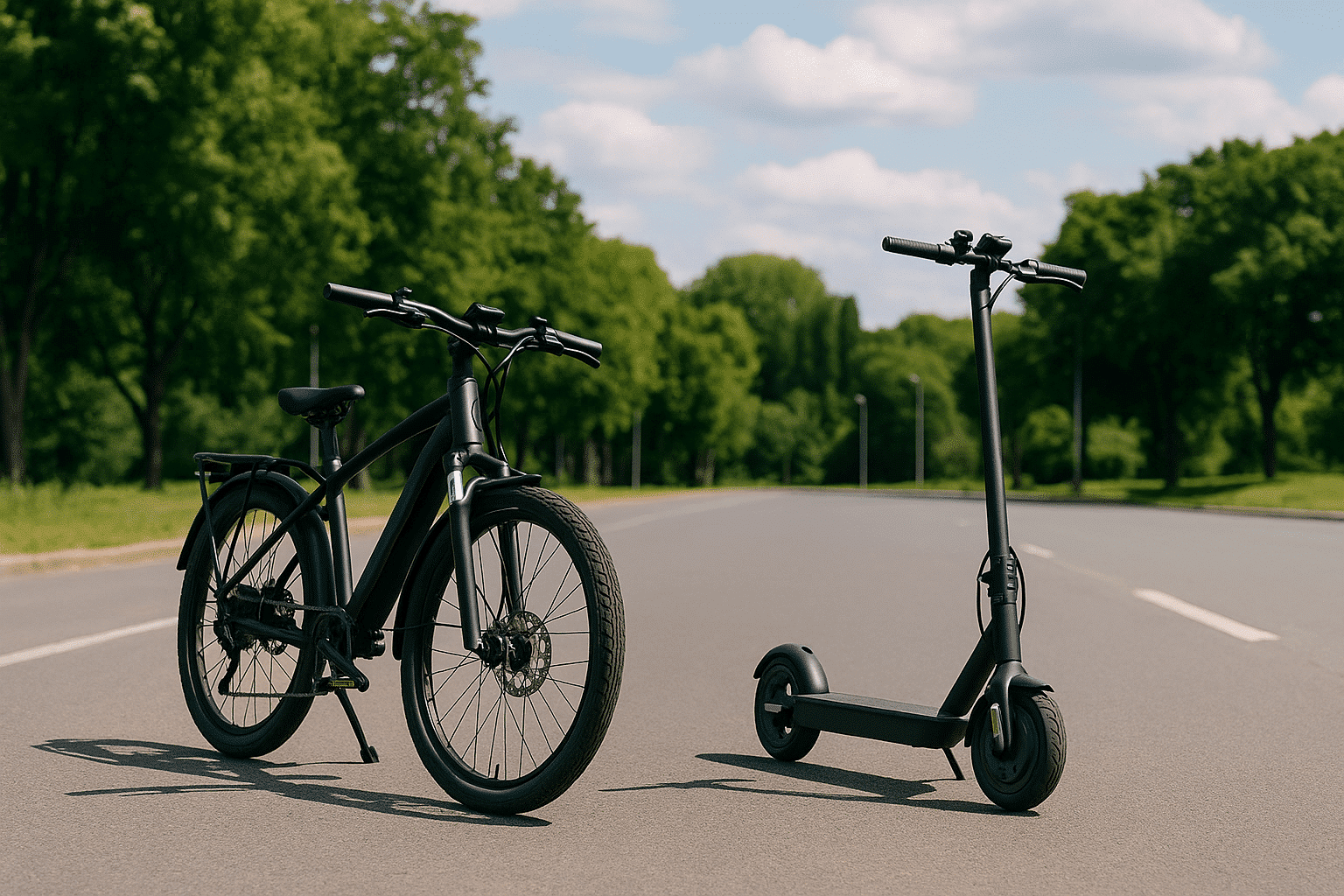
What is a "micromobility device"?
The term covers a variety of small, low-speed transportation devices, including bicycles, electric bicycles, electric scooters, skateboards, roller skates, inline skates, self-balancing devices, and similar devices.
Are bicycles and e-bikes still allowed on Alexandria streets?
Yes. The ordinance does not prohibit the use of bicycles or e-bikes. Riders are expected to follow applicable traffic laws and traffic-control devices and operate in a safe and prudent manner.
Can I ride a bicycle or e-scooter on the sidewalk?
Generally, yes. Bicycles, Class 1 and Class 2 e-bikes, and electric scooters may operate on sidewalks unless otherwise prohibited by City signage.
However, pedestrians always have the right-of-way. Riders must slow down when approaching pedestrians, give them adequate space, and get off and walk the device if the sidewalk becomes too crowded to operate safely.
Class 3 e-bikes may not be operated on sidewalks.
What are the three classes of e-bikes?
The ordinance recognizes these three categories:
Class 1: Motor assistance operates only while the rider is pedaling and stops assisting at 20 mph.
Class 2: The motor can propel the bicycle without pedaling and stops assisting at 20 mph.
Class 3: Motor assistance operates while the rider is pedaling and stops assisting at 28 mph.
Why does the class matter?
Because faster e-bikes have additional restrictions in areas such as sidewalks, trails, and shared-use paths.
Can I ride an e-bike or scooter on a shared-use path?
Yes, with some restrictions.
Bicycles, Class 1 e-bikes, Class 2 e-bikes, and electric scooters may use shared-use paths unless signs say otherwise. Class 3 e-bikes may only use shared-use paths specifically designated by the City for Class 3 use.
Regardless of the device, pedestrians have the right-of-way.
Can I ride through a park?
Bicycles, Class 1 and Class 2 e-bikes, and electric scooters may be operated on designated roadways, parking areas, shared-use paths, and trails specifically designated for their use.
They may not be operated on athletic fields, playgrounds, splash pads, landscaped areas, or other areas where signs prohibit their use.
Who has the right-of-way?
Pedestrians.
This is one of the most important principles of the new regulations. Pedestrians have the right-of-way on sidewalks, shared-use paths, trails, crosswalks, parks, and other public areas where bicycles and micromobility devices are permitted.
Riders are expected to slow down, provide adequate clearance, and avoid creating conflicts with pedestrians.
Do riders have to warn pedestrians before passing?
When reasonably necessary for safety, riders passing pedestrians or other lawful users should provide an audible warning—such as a voice, bell, horn, or other lawful warning device—before passing. Riders must also reduce their speed and maintain enough space to pass safely.
What if a sidewalk or trail is crowded?
If pedestrian traffic becomes too congested for safe operation, the rider must get off and walk the device until it is safe to resume riding.
Are helmets required?
Yes for riders age 16 and younger.
Anyone 16 years old or younger operating or riding as a passenger on a micromobility device on public streets, sidewalks, paths, trails, parks, or other public property must wear a properly fitted and fastened bicycle helmet meeting an applicable recognized safety standard.
Can I carry a passenger on my bike or scooter?
Only if the device is specifically designed and equipped by the manufacturer to carry a passenger. The ordinance also permits approved child seats, trailers, and tag-along attachments.
If a passenger is 16 or younger, that passenger must wear a properly fitted and fastened helmet.
Can I ride while wearing headphones?
Riders may not operate a bicycle, e-bike, or electric scooter on a public roadway while wearing headphones or earbuds in both ears if they prevent the rider from hearing surrounding traffic.
A single earbud, hearing aid, or qualifying hands-free communication device is permitted.
Can I ride after dark?
Yes, but the device must meet the applicable Kentucky lighting, reflector, and equipment requirements when lighting is required. AKA, lights, reflectors and high visibility clothing.
What kinds of riding are prohibited?
The ordinance prohibits unsafe or reckless behavior, including:
- Riding at an unreasonable speed for conditions;
- Weaving through pedestrian traffic;
- Failing to yield to pedestrians;
- Riding in a manner likely to injure someone or damage property;
- Ignoring traffic-control devices;
- Racing or unauthorized speed competitions;
- Dangerous stunts or trick riding;
- Damaging public property; and
- Riding in areas where posted signs prohibit operation.
Riding while impaired by alcohol or another substance that affects safe operation is also prohibited.
What about electric dirt bikes, mini-bikes, ATVs, and similar vehicles?
These are not considered e-bikes or micromobility devices under the ordinance.
Electric dirt bikes, mini-bikes, pit bikes, trail bikes, ATVs, UTVs, go-karts, dune buggies, and similar motorized recreational vehicles are specifically addressed and generally may not be operated on City sidewalks, trails, shared-use paths, parks, greenways, or other public property unless specifically authorized.
Can I modify my e-bike?
An owner cannot modify an e-bike in a way that changes its manufacturer-designated classification without properly relabeling it to reflect its new classification.
A modified e-bike must also follow the restrictions associated with its new classification.
Will people immediately receive tickets for minor violations?
The City’s goal is compliance and safety—not simply writing tickets.
For certain first-time safety violations, the ordinance specifically allows an officer to issue a warning and educational information instead of a citation when the officer determines that is appropriate.
The ordinance was also discussed by City Council with an emphasis on the possibility of using education in appropriate circumstances rather than citations.
Are there fines for violations?
Yes. Violations are classified as civil offenses. For an uncontested citation, the ordinance establishes a $50 fine for a first offense, $100 for a second offense, and $250 for a third and subsequent offense. Different procedures and maximum fines can apply when a citation is contested and goes before the Code Enforcement Board.
Can the City temporarily restrict where these devices can operate?
Yes. The City may restrict or prohibit particular classes of micromobility devices on specific sidewalks, trails, parks, shared-use paths, or other public facilities when necessary for public safety, protection of public property, or to reduce conflicts among users.
Temporary restrictions may also be imposed during special events, emergencies, construction, maintenance, or other circumstances affecting public safety. Any restrictions are to be communicated through signs or other reasonable notice.
The Bottom Line
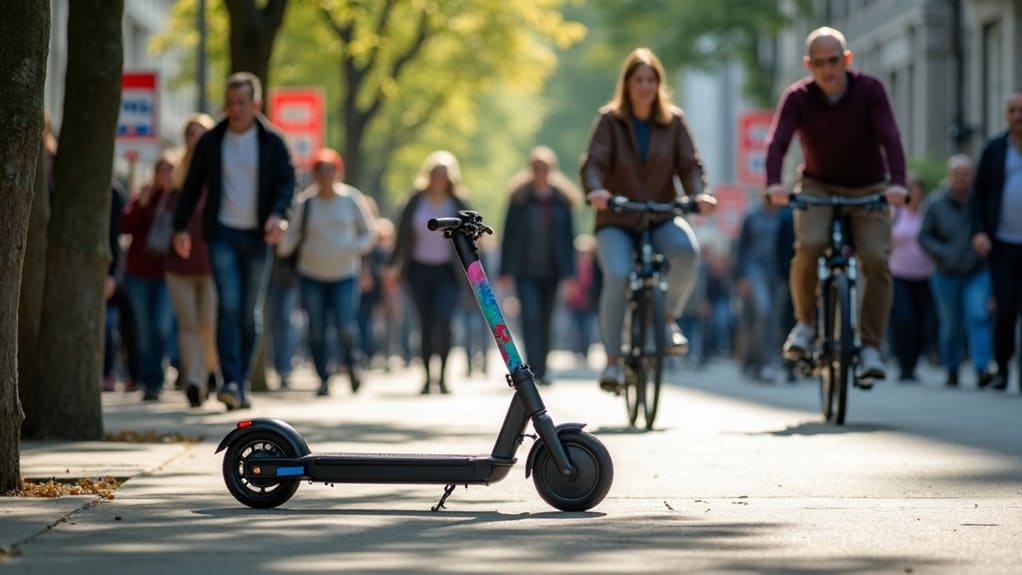
Bicycles, e-bikes and electric scooters are welcome in Alexandria. The new regulations are intended to make their use safer and more predictable for everyone.
For riders, the basic rules are simple:
Follow traffic laws. Slow down around pedestrians. Yield to pedestrians. Use devices only where permitted. Keep your equipment safe. Pay attention to signs. And use good judgment.
For pedestrians and other residents, the regulations provide clearer expectations for how these devices should be operated in shared public spaces.
The City’s objective is not to prevent people from riding, it is to help riders, pedestrians, motorists, and families safely share Alexandria’s public spaces.
This FAQ is intended as a plain-language explanation of Ordinance 2026-06. In the event of any conflict between this summary and the City’s Code of Ordinances, the ordinance supersedes.